
A podcast
for those in the industry—from film, to TV, to production finance.




Featured Episodes

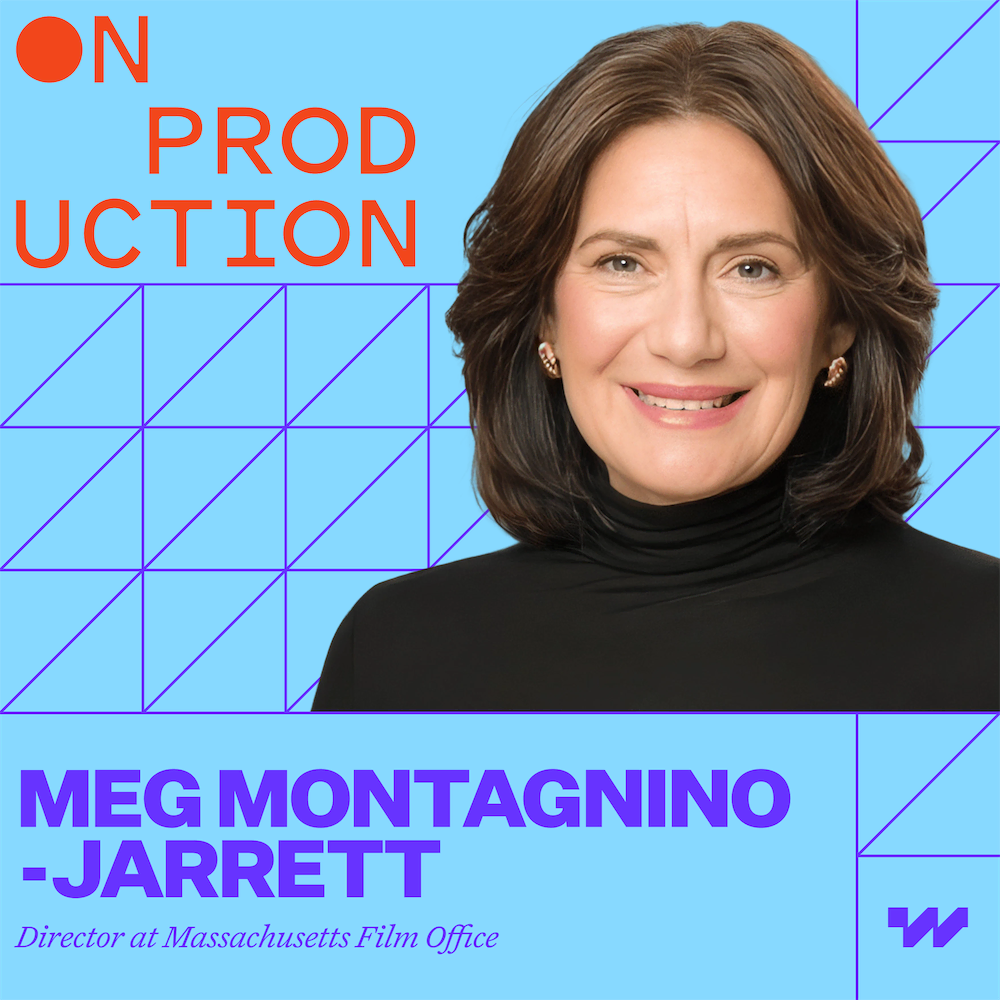
Filming in Massachusetts featuring Meg Montagnino-Jarrett
Cameron sits down with Meg Montagnino-Jarrett, Director of the Massachusetts Film Office, to break down how one of the more straightforward incentive programs in the United States works in practice.
Previously, Montagnino-Jarrett held the role of Film Liaison for the Cape Ann area of Massachusetts, where she played a pivotal role in developing the region’s film industry. A film producer and media veteran of the motion picture industry, she brings over three decades of experience to her current role. Montagnino-Jarrett joined the Film Office in December 2023 and has since overseen AMC episodic TV The Walking Dead: Dead City (Seasons 2 & 3), Barry Jenkins’ Sorry, Baby, A24’s The Drama and Tony, Apple TV episodic Widow’s Bay, and other current productions. Her impressive credits include iconic films such as Good Will Hunting and The Departed. Montagnino-Jarrett holds a Bachelor of Arts from Marquette University.
The conversation focuses on how to think about the program economically and how producers should structure budgets and schedules to qualify without creating problems later. Montagnino-Jarrett walks through the real-world workflow—from registration and spend tracking to final certification—and highlights the small administrative details that can quietly delay or jeopardize a credit.
They also cover where producers tend to misjudge the state, how to think about partial versus full relocations, and what types of projects tend to work best. Montagnino-Jarrett shares how Massachusetts positions itself against other incentive states, where the crew base is strongest, and what practical tradeoffs producers should consider when deciding where to shoot.


How Payroll Problems Become Production Nightmares featuring Kerry LaiFatt
On this episode of On Production, we sit down with Kerry LaiFatt, Vice President of Sales for Film and Television at Wrapbook, to explore the invisible infrastructure that keeps productions running: payroll and accounting.
With a career that spans on-camera work, unscripted media conferences, and nearly a decade inside one of the industry’s largest payroll and accounting platforms, Kerry brings a rare perspective on how financial systems shape what happens on set. She explains why payroll isn’t just back-office processing—it influences scheduling, hiring, union compliance, and cost reporting—and how breakdowns in these systems don’t stay on paper; they surface in production.
The conversation also examines what’s changed post-2020, from experience gaps and onboarding bottlenecks to the growing expectation that payroll partners provide operational guidance, not just processing. Kerry discusses the shift toward truly paperless, self-serve workflows and the emerging role of AI in reducing cognitive load across production finance, helping teams eliminate friction so they can focus on strategic decisions instead of cleanup.
For producers, accountants, and studio teams navigating today’s evolving production landscape, this episode offers a practical look at the systems that quietly determine whether a production stays aligned or drifts.
Latest episodes
Filming in Massachusetts featuring Meg Montagnino-Jarrett

How Payroll Problems Become Production Nightmares featuring Kerry LaiFatt

How to Keep a Film on Budget and on Schedule featuring Stephen Marinaccio

The Business of Building a Film Hub featuring Patrick Mulhearn

The Discipline of Less Is More for All the Empty Rooms featuring Matt Porwoll

How Maryland Is Attracting Big Shows and Indie Films Alike with Catherine Batavick
The New Reality of Reality Television with Michelle Van Kempen

Why Film Editing Is Emotional Work with Viridiana Lieberman

What It Takes to Turn a Bestseller into a Box Office Hit with Bob Bookman
The Producer’s Role in a Changing Film Economy with Tom Butterfield
Future-Proofing Your Studio in a New Era of Production with Joel Pilger
Filming in Wisconsin: What the New Incentives Mean for You

Film Distribution in the Age of AI with Tara Hein-Phillips
Tech-Driven Payroll for a 24/7 Industry with Steven Fishman

Why Eli Roth Says Dream Eater Is One of the Scariest Films of the Year
Shooting an Indie Movie in Open Water with Elliott Hasler
Can Tariffs Keep Film Jobs in the U.S.? with Will French
Union Rules, Rates, and Roadblocks with Ida Lee Henderson
Behind the Scenes of Payroll Accounting
What Producers Should Know About Filming in Fort Worth with Taylor Hardy
How Horror Movies Are Made with Joe Begos

Generative AI in Modern Game Design with Elliot Wolf
Inside the Modern Producer’s Toolkit with John Trefry

What Makes a TV Format Work with Clara Plestis

How Cloud Tech Is Changing the Way We Make Movies with Hugh Calveley

What Filmmakers Need to Know About Modern Distribution with Bonnie Bruderer

Building Better Tools for the Writer’s Room with Josh Kline

Tech that Finds the Shot You Forgot with Lucas Igel

What a 100% Tariff Could Mean for Movies with Will French

Delivering the Final Cut with Jijo Reed

Crowdfunding Strategy That Actually Works with Emily Best

The Business of Global Productions with Cary Woodworth

The Power of Authenticity and Vulnerability with Kristen V. Carter

From Tax Incentives to Stunning Locations: Why West Virginia is Ready for Your Next Shoot

How Fans Can Help Fund the Next Big Indie Film with Marc Iserlis

Stories for Social Impact with Tony Gapastione

The Horror Boom: Breaking Down the Genre’s Biggest Trends with Stephen Follows

How Tech is Transforming Production Workflows with Herman Phillips

Reel to Real: Filmmaking in the Upper Midwest with Shari Marshik

Smart Tools for the Modern Filmmaker with Luke DeBoer

Budgeting Smarter, Not Harder with Jens Jacob

Building the Perfect Writers’ Room with Jon Stahl

The Future is Green: A Guide to Sustainable Film Sets with Max Hermans

Modernizing Script Workflows with Steve Vitolo

Revolutionizing Production Workflows with Rob Weidner

Screenwriting in the Age of Tech with Guy Goldstein

Mastering Media Strategy with Steve Caplan

Georja Skinner on Hawaii’s Film Resurgence

Inside Nevada’s Blockbuster Potential with Kim Spurgeon

An Insider’s Guide to Production Insurance with Adam Darragh

Oregon on Screen: Tim Williams’ Spotlight on the State’s Cinematic Evolution

The Business of Blockbusters: Peter Klass Breaks Down Entertainment Finance

Emily Rice’s The List & New Accounting Community

The Art of the Cut: Inside the World of Film Editing with Lucas Harger

The Power of Collaboration: Wrigley Media Group’s Approach to Filmmaking Partnerships

The Director’s Chair: Pablo Feldman and Sophia Sabella on their Journey towards ‘Edge of Everything’

How Mid-Form Content is Redefining Storytelling with Georgia Rippin

On Location: Exploring North Carolina’s Cinematic Charm with Guy Gaster

Inside Unscripted TV: Nicole Walberg’s Reflections on Making Reality TV

Mastering the Art of Production Management with Tony Low

From Music to Movies: Antonio Pontarelli’s Multifaceted Career

The Art of Commercial Productions: Insights from Five to Sixty

Film, Finance, and Future: V Gordon’s Perspective on Production Accounting

Colorado Calling: Inside the State’s Film Commission

Nathan Wakefield’s Insights into Production Finance for Reality TV

Aaron Gordon on Optic Sky: Pioneering AR/VR in Modern Production

Demystifying Film Tax Credits: A Conversation with Will French

Pioneering the Future of Production Accounting with Wrapbook

A Leap in Production Accounting: Liz Blunnie Shares Wrapbook’s Latest

Inside “Daruma”: A Real Take on Disability in Film

Producer’s Playbook: Gabe Godoi’s Tips on Building a Talented Crew

Miranda Bailey on “The Squid and the Whale” and Indie TV

Blending Tech and Tradition with Marc Longberg

Shant Joshi: Championing BIPOC and Queer Stories


Airforce to Auteur: David Lawson Jr. Charts a Unique Course in Film

Financing Films & TV: A Masterclass with David Offenberg

Cracking the Code of Film Law: Mark Litwak on Hollywood’s Legal Landscape

Introducing Wrapbook’s Film Incentive Center

Island Insights: Navigating Commercial Filming in Hawaii


Small Town, Massive Impact: The Economic Influence of “Home Town” in Mississippi

Unlocking Hollywood: Chuck Braverman’s Tips for a Lasting Legacy

From Punk Shows to Policy: Event Insurance for the Pros with Nichole Jensen

From “Batman Begins” to Indie Hits: Milan Chakraborty on Filmmaking

How Film Commissions Shape Our On-Screen Stories

The Art of Realness: Crafting Authentic Stories in Reality Television

From Punk Rock to Professor: Kevin Lyman’s Evolution in Music Events

Smartypants Talks Producing Their First Oscar Nom


Meet Cameron Woodward
Running payroll all the time?
If you’re running multiple productions in a year or processing a large amount of payroll, reach out to our expert sales team to discuss alternative pricing options.